
01Dental MoSi2 · 4/9 & 3/6
MoSi2 heating elements 4/9 and 3/6 for dental sintering furnace replacement
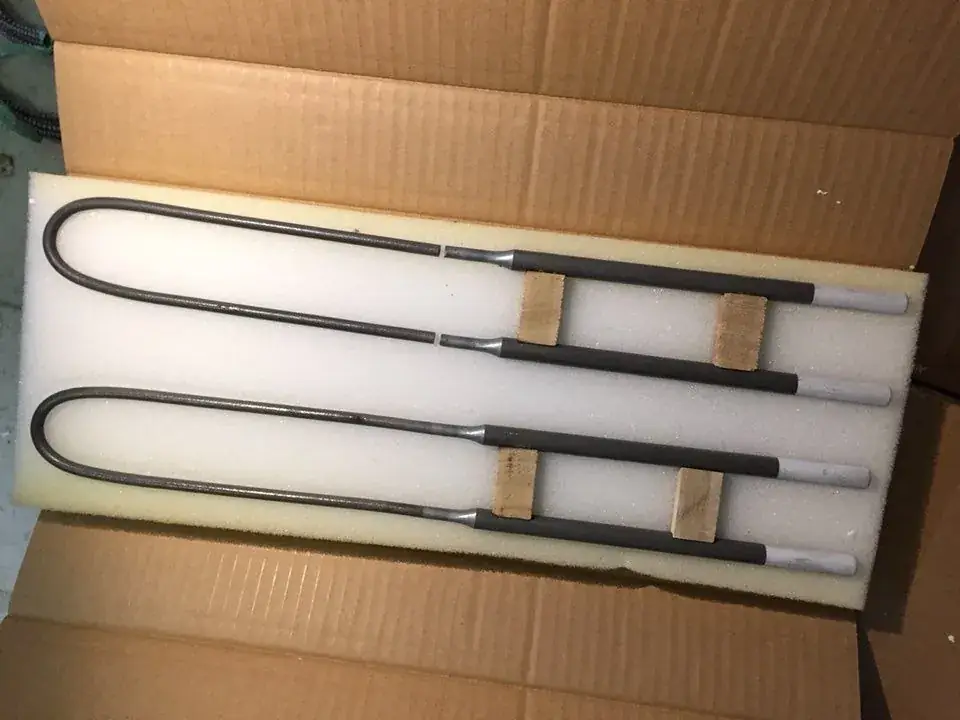
Small U-shaped MoSi2 elements for zirconia sintering furnaces. Sizes depend on the furnace model, so we check the model and the old element first, then quote. Send the model and a photo with the dimensions.
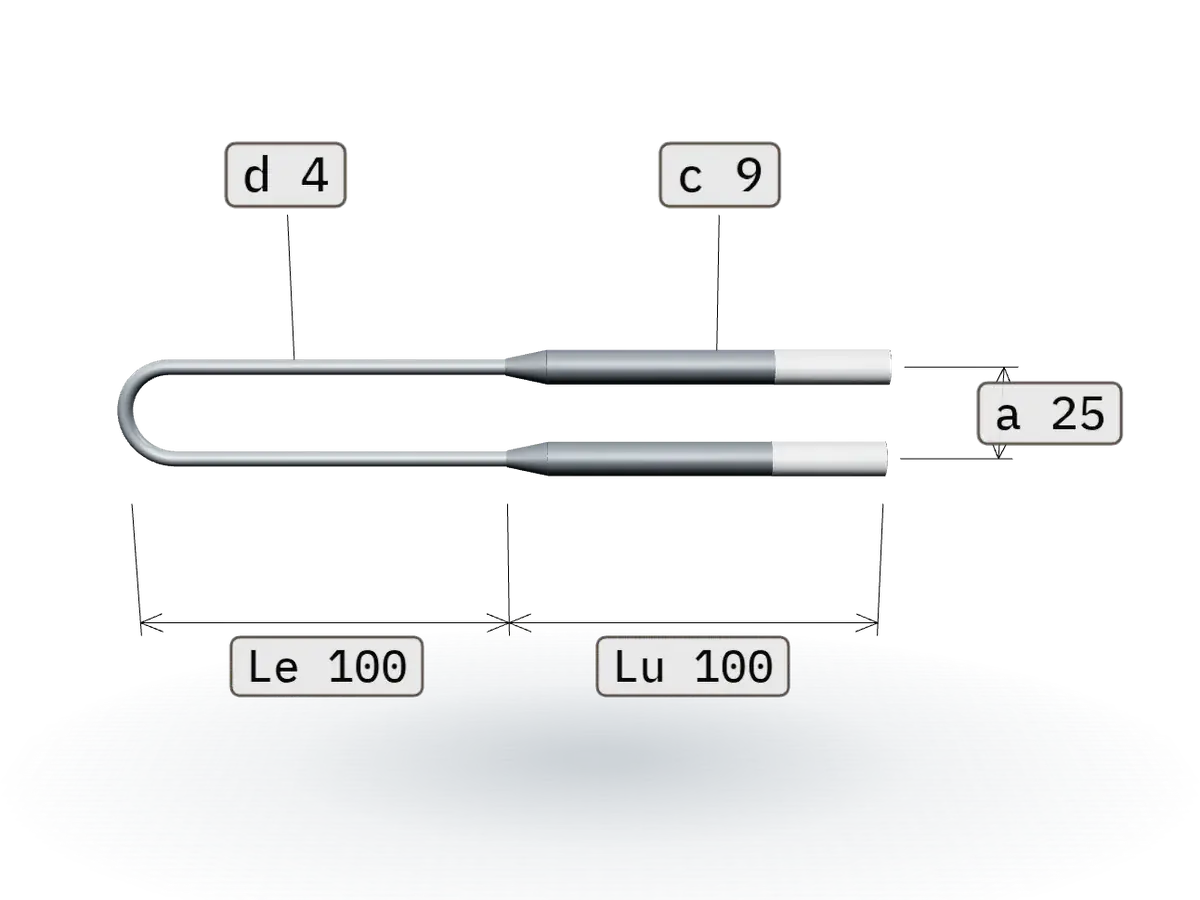
Written asfurnace model + 4/9 × Le × Lu × a
Last updated 12 October 2026
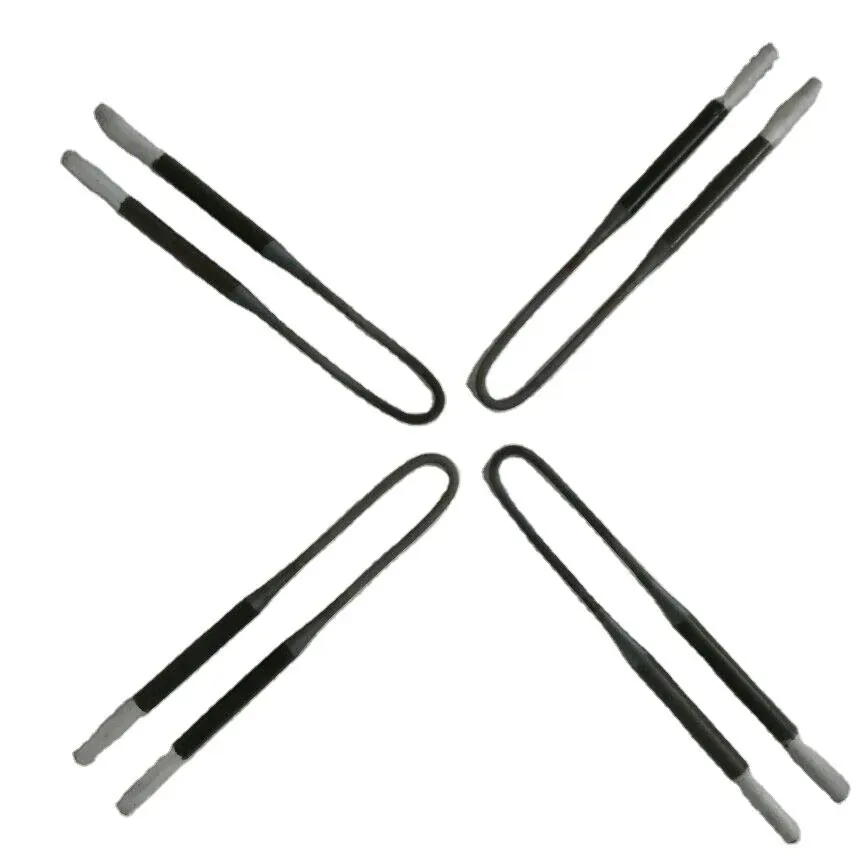
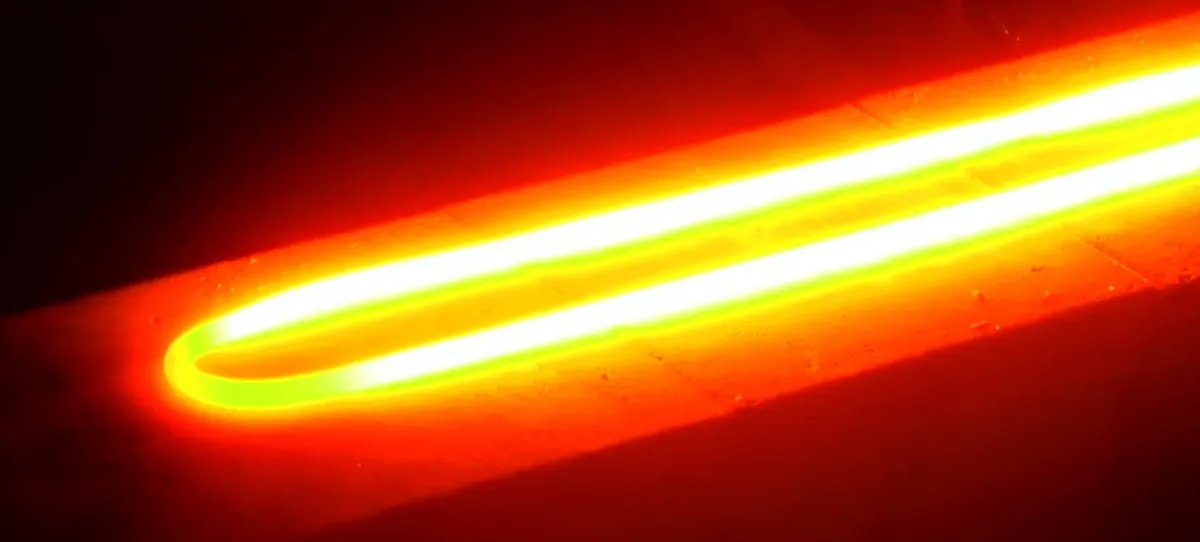
Photos: typical elements of this type, not a specific order.
| d/c | Heating-zone / terminal diameter: 4/9 or 3/6 (sometimes written 9/4) |
|---|---|
| Le | Heating length |
| Lu | Terminal length |
| a | Leg centre distance |
| shape | Straight U or bent |
What to send
- Furnace brand and model (type plate)
- Photo of the old element next to a ruler
- Diameters 4/9 or 3/6 (thin / thick section)
- Le, Lu and leg spacing a
- Straight or bent, and how many elements the furnace holds
- Part number from the manual or box, if you have it
What the manuals say, by furnace model: Programat S1, inFire HTC speed, Sintra, LHT 01/17 D, ZYRCOMAT 6000 MS, Zirkonofen 600 (all six). Measuring step by step: MoSi2 element sizes. Furnace names are trademarks of their owners.
3D view of the shape
See the element from every side: drag to rotate, switch Dimensions and Hot zone on or off. The 3D view loads only when you click.
 3D illustrationDrag to rotateSwipe sideways to rotate
Illustration only – not a drawing or a photo of a real part; dimensions vary by part number.
MoSi2 4/9
4 mm heating zone, 9 mm terminals. The size many dental sintering furnaces use. Lengths and leg spacing still vary between furnace models, so a 4/9 element is always checked against the furnace model and the old element.
Send: furnace model, photo, Le, Lu, a, shape.
MoSi2 3/6
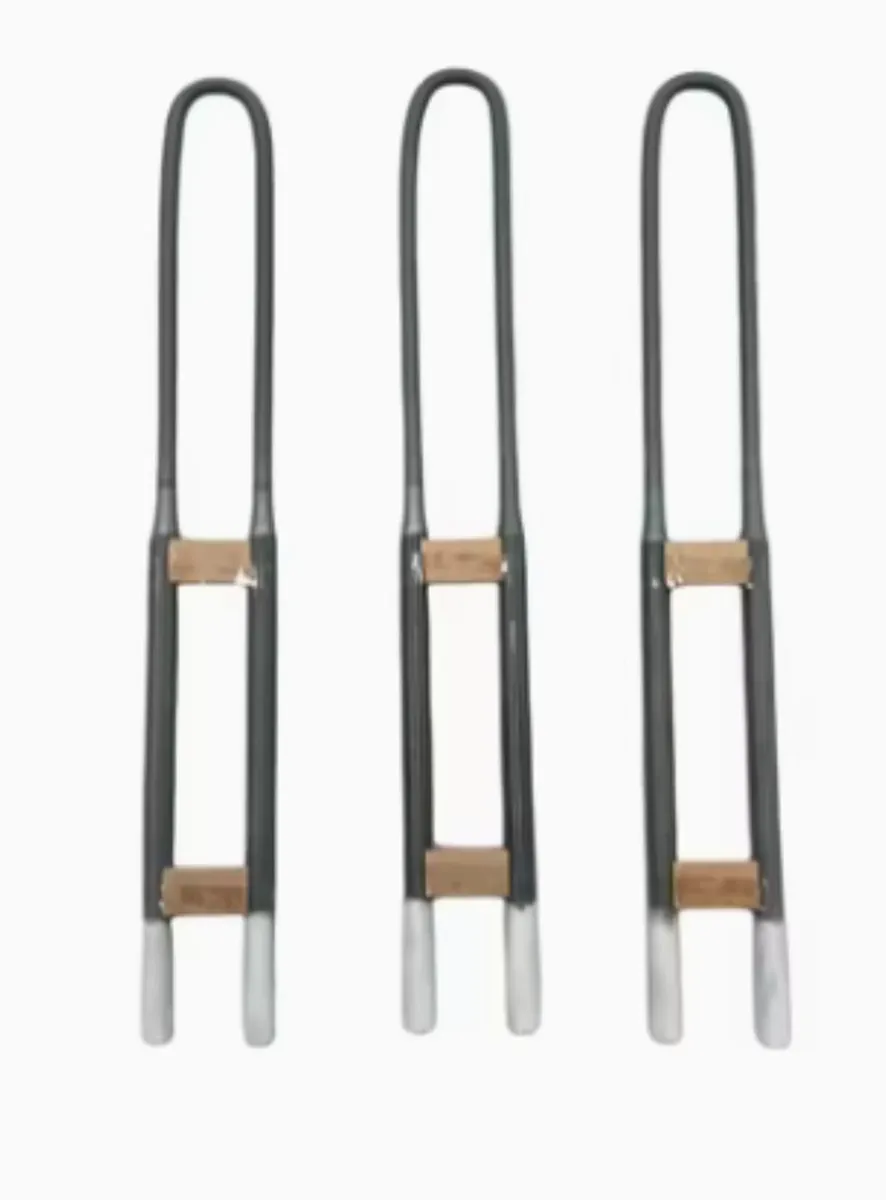
3 mm heating zone, 6 mm terminals. Used in fewer dental furnaces than 4/9. Because only some models use it, the furnace model and a photo of the old element are needed before we can reply.
Send: furnace model, photo, Le, Lu, a, shape.
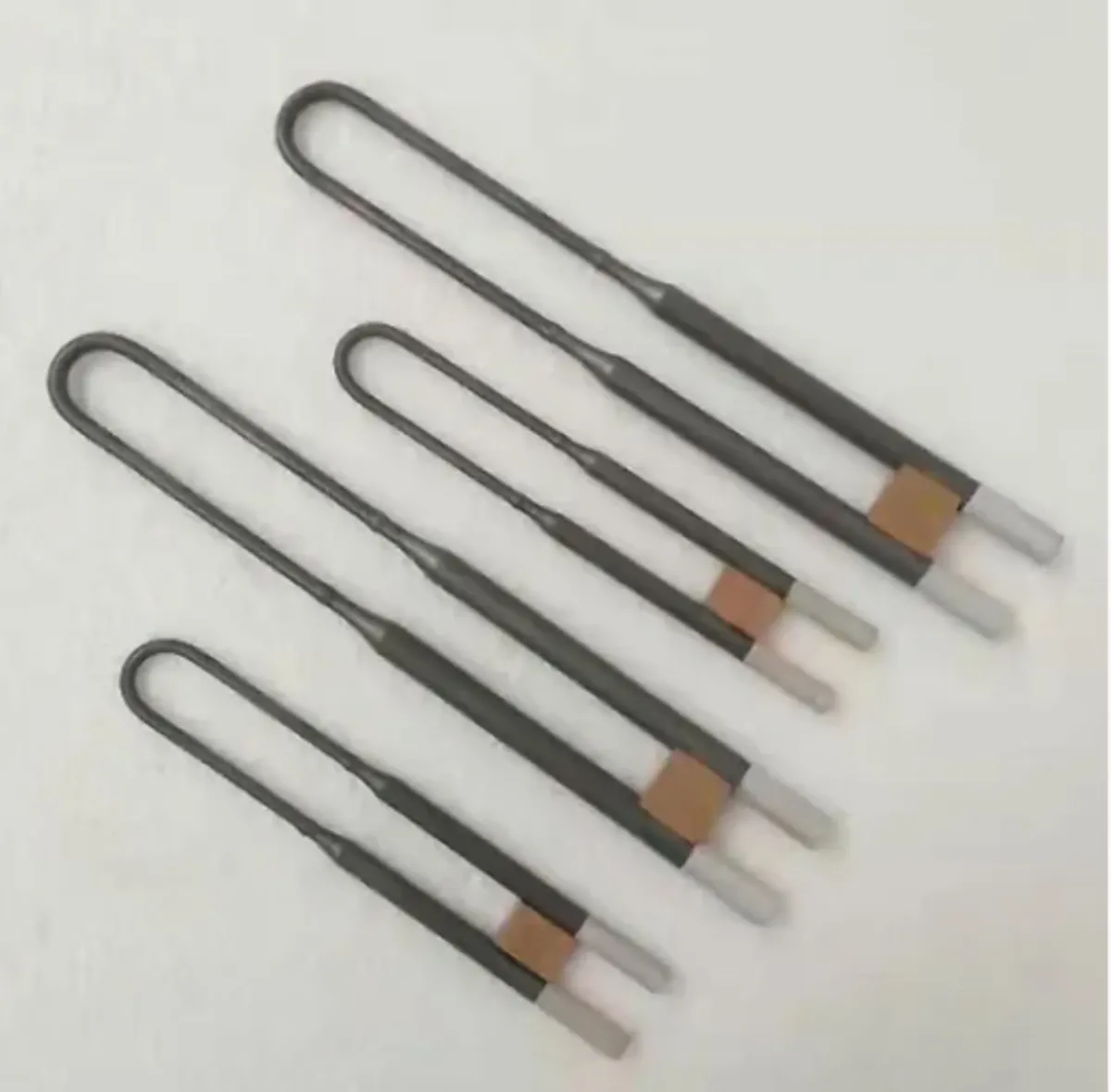
Photos show typical elements of each type, not a specific order or a specific furnace model. Some compact furnaces use bent elements: the photo shows which shape you have.
4/9 and 3/6 elements are also used in small laboratory furnaces, not only in dental furnaces; the check is the same. Some dental furnaces heat with silicon carbide instead: see dental-furnace SiC elements.
Production & testing
Typical stages for elements of this type: raw material, firing and power tests, checking against the size line, and packing.
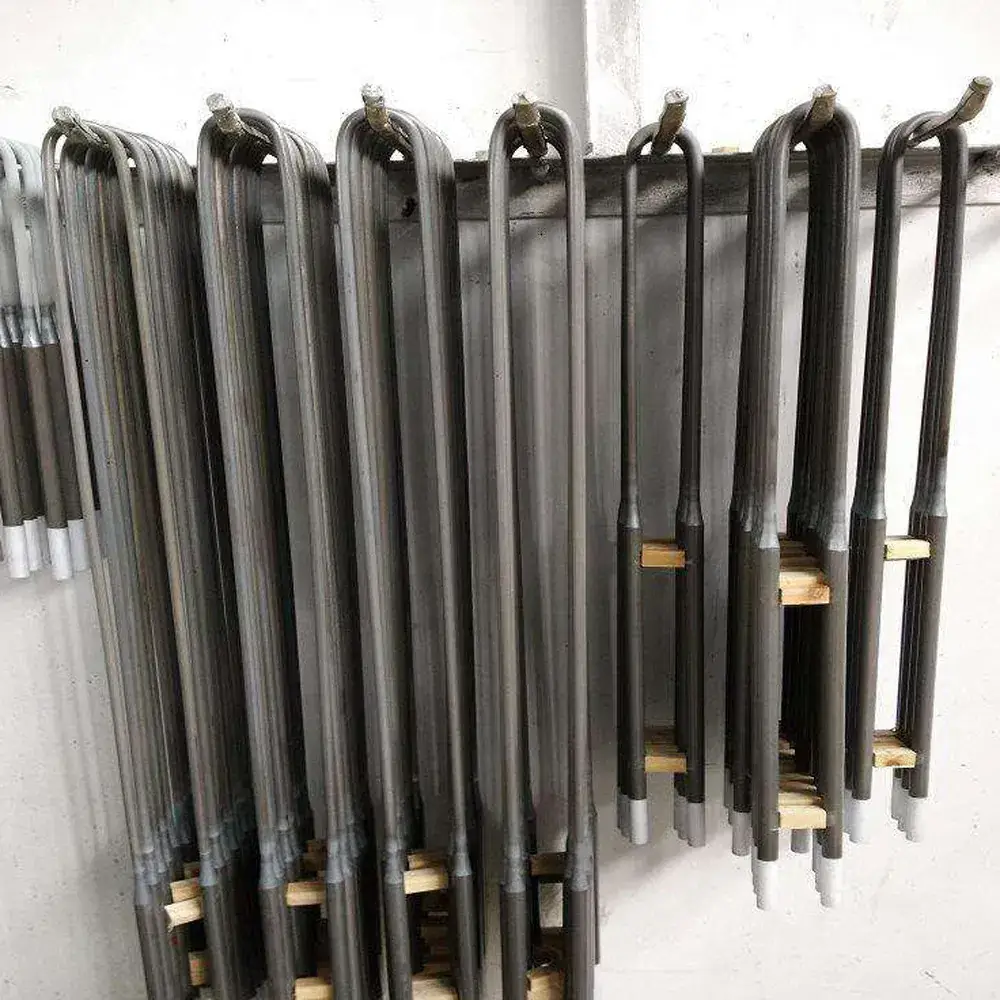
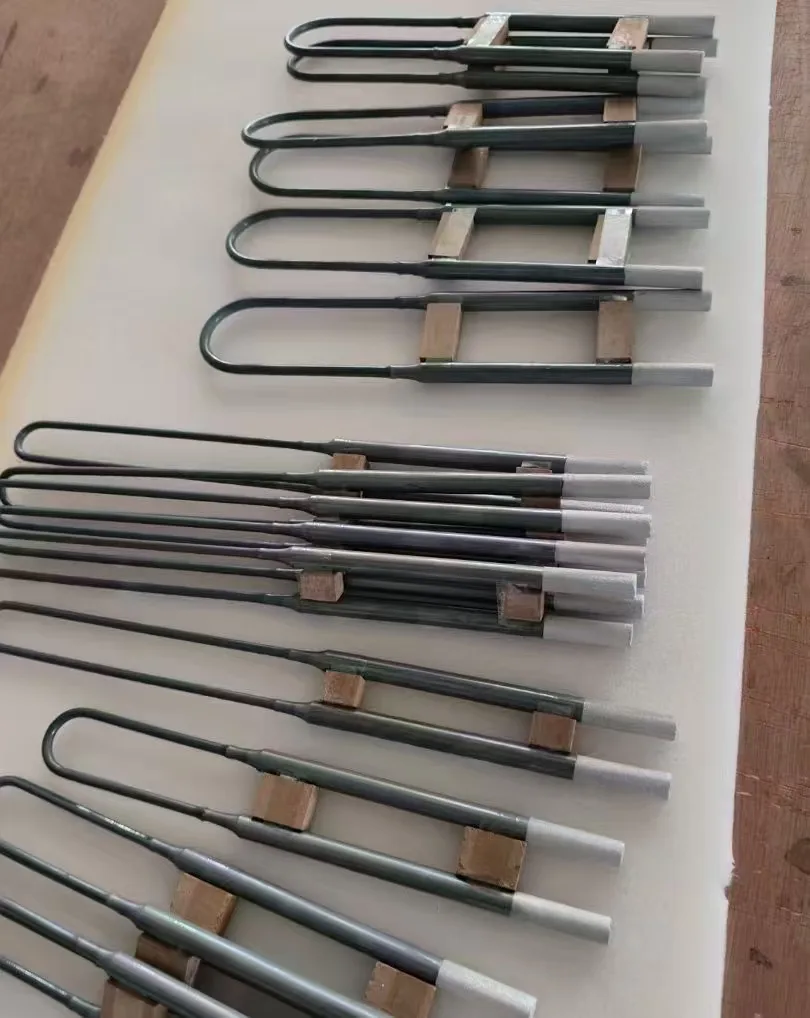
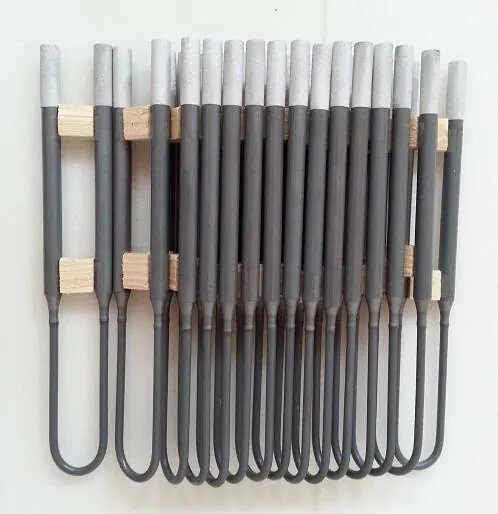
Photos show typical production, testing and packing of elements of this type – not a specific order.
How the furnace-model check works
Send
The furnace model and a photo of the old element, or its part number. Dimensions if you can measure.
We check and confirm the spec
We check the dimensions and reply in writing with the size line we read, any missing value, and whether we can supply it.
You confirm the configuration
Size, number of elements per set and, for SiC rods, how they are grouped by resistance.
Production and shipping
Production and shipping are arranged for the confirmed configuration; the quote covers that element and quantity.
Dental furnace service, dealers and labs: see dental sintering furnaces for typical situations.
Questions buyers ask
What is the difference between 4/9 and 3/6 MoSi2 elements?
The numbers are the diameters in millimetres: hot zone / terminal. A 4/9 element has a 4 mm heating section and 9 mm terminals; a 3/6 element has 3 mm and 6 mm. Many dental sintering furnaces use 4/9; fewer use 3/6, and some documents write the size as 9/4. The two sizes are not interchangeable, and lengths and leg spacing still differ between furnaces, so the furnace model and a photo of the old element are needed.
Which element does my dental sintering furnace use?
It depends on the model. Many zirconia sintering furnaces use small U-shaped MoSi2 elements, most often 4/9, some 3/6. The furnace brand and model and a photo of the old element tell us which.
Is there one universal dental furnace element?
No. Diameter, heating length Le, terminal length Lu, leg spacing a, shape and the number of elements differ between furnaces. That is why every request is checked against the furnace model and the old element.
Should all elements be replaced at once?
Many dental furnace manuals ask for all elements to be replaced together. Follow your manual and tell us how many elements your furnace holds.
The old element has a yellowish powder on it. Is that a fault?
A light yellowish powder near MoSi2 elements is usually molybdenum oxide and, according to element handbooks, normally harmless. Zirconia discolouration is more often linked to contamination such as iron oxide or colouring liquid that was not fully dried.
Why don’t you just send a price?
Because a price for the wrong size helps nobody. Two elements that look the same can differ in diameter, centre distance or length. We first confirm the size line with you; the quote then covers that exact element and quantity.
Other sizes: send the part number. Request an element check →
Request a quote
Send the part number, or a photo of the old element with the dimensions. We reply by email with the size line we read and anything missing.