
01Furnace model · Ivoclar
Programat S1 heating element replacement (S1 and S1 1600)
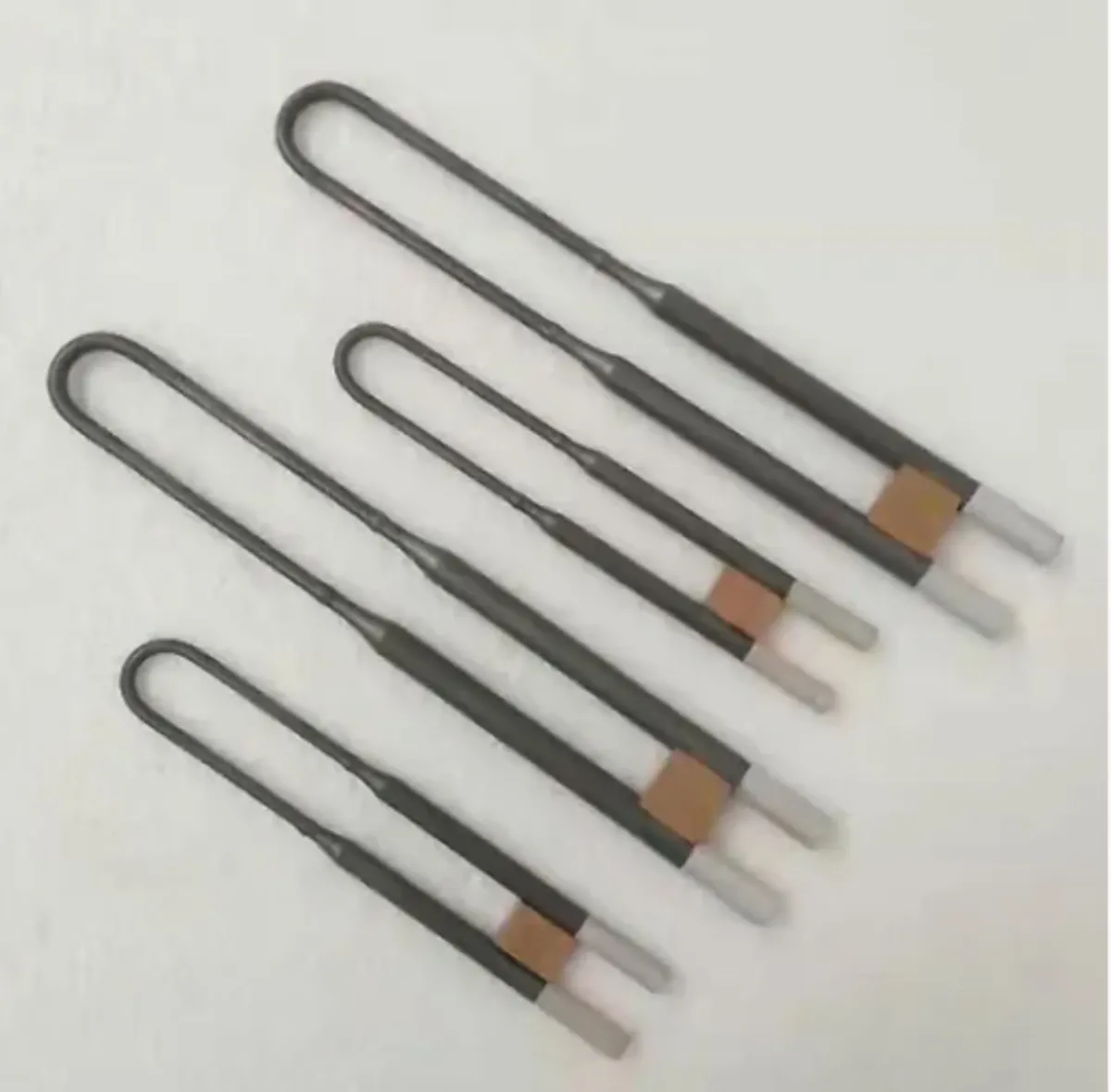
Ivoclar’s documents explain when the Programat S1’s heating elements need a cleaning firing, a service or replacing – but not their material, number or size. Send the serial number and a photo of the old element next to a ruler; we write back the size line we read.
SendProgramat S1 + serial number + photo with ruler
Last updated 20 October 2026
Ivoclar documents: what they say
From the Programat S1 operating instructions [1] and Ivoclar’s S1 1600 processing guidelines [2].
| Topic | What the document says |
|---|---|
| Maximum temperature | Sintering chamber up to 1530 °C on the Programat S1 [1]; the S1 1600 guide explains its maximum firing temperature of 1600 °C [2]. |
| Heating elements | Material, number and size are not stated. The cleaning section shows a left and a right heating element [1]. |
| Discolouration | Contamination may come from chipping of the oxide / protective layer of the heating element surface, among other causes, and may affect the optical properties of the sintered object [1]. |
| Cleaning firing | The cleaning program recreates the chipped-off protective layer. If no smooth layer is visible after one cleaning firing, several may be necessary – with no ZrO2 objects in the furnace, and after cleaning the sintering chamber [1]. |
| Service Hint 1700 | Appears when 2 years have passed or the heating elements have been in use for more than 1200 firing hours; Ivoclar then recommends a maintenance and service procedure [1]. |
| Replacing | If the heating elements show no improvement even after multiple cleaning cycles, Ivoclar recommends replacing them; cleaning or replacing is recommended if the contamination reappears [2]. |
| Bent or fractured element | Switch off the furnace and contact the Ivoclar Vivadent After Sales Service [1]. |
| Repairs | Repairs may only be carried out by an authorised Ivoclar Vivadent After Sales Service Centre, which is also the only place to dismantle the sintering chamber [1]. |
“Not published” means we did not find it in the documents listed under Sources; it may exist in service documents we have not seen.
Signs to look for
- Clearly visible, glassy transparent particles on the insulation of the lower furnace part or on the sinter tray rest [1].
- Fine glass dust on the insulation of the lower part and on the cooling tray – harder to see [1].
- Discoloured restorations. Chipping of the elements’ protective layer is one possible cause [1]; a dusty sinter tray can cause contact reactions, seen for example as white spots [2].
- Service Hint 1700 on the display [1].
- A bent or fractured heating element [1].
Ivoclar’s order: clean, fire, then replace
Clean the sintering chamber, run the cleaning program – several times if needed – and replace the heating elements only if they show no improvement or the contamination keeps coming back [1][2]. Do not use compressed air on the furnace: it contains ceramic fibres [1].
What to send for a Programat S1
- Model as on the type plate (S1 or S1 1600) and the serial number
- Photo of the old element next to a ruler, both legs in the picture
- Diameters of heating zone and terminal, e.g. 4/9 or 3/6, if you can measure
- Heating length Le, terminal length Lu and leg spacing a
- Straight or bent, and how many elements you want to replace
- Item number from the box or service documents, if you have one
Why the furnace name is not enough
The operating instructions do not publish the element material, the number of elements or their dimensions [1]. A photo and four measurements give us the size line; we write it back to you for confirmation.
Measuring: MoSi2 element sizes. Background: zirconia discoloration and the heating elements. Other furnaces: dental furnace models.
How the furnace-model check works
Send
The furnace model and a photo of the old element, or its part number. Dimensions if you can measure.
We check and confirm the spec
We check the dimensions and reply in writing with the size line we read, any missing value, and whether we can supply it.
You confirm the configuration
Size, number of elements per set and, for SiC rods, how they are grouped by resistance.
Production and shipping
Production and shipping are arranged for the confirmed configuration; the quote covers that element and quantity.
Dental furnace service, dealers and labs: see dental sintering furnaces for typical situations.
Questions buyers ask
Which heating element does the Programat S1 use?
Is discolouration always caused by the heating elements?
No. Ivoclar names chipping of the elements’ protective layer as one possible cause among others [1], and contact reactions with a dusty sinter tray as a cause of white spots [2]. The discoloration guide collects what several furnace makers write.
When does Ivoclar recommend replacing the elements?
Are these Ivoclar original parts?
No. PMEXO is an independent supplier of replacement heating elements and is not affiliated with Ivoclar. Ivoclar’s instructions reserve repairs for authorised Ivoclar Vivadent After Sales Service Centres [1]; check what applies to your furnace before any work on it.
Sources
- Ivoclar Vivadent: Programat S1 Operating Instructions (PDF, hosted by ivodent.hu). Sections 2, 3.3, 7 and 8
- Ivoclar Vivadent: Programat S1 1600 – Guidelines for the processing of ZrO2 materials in the Programat S1 1600 (PDF, hosted by ivodent.hu)
Ivoclar, Ivoclar Vivadent, Programat and the model names on this page belong to their respective owners and are used only to identify the furnace. PMEXO is an independent supplier of replacement heating elements and is not affiliated with or endorsed by Ivoclar. Photos show the element type, not a part of this furnace.
Request a quote
Send the part number, or a photo of the old element with the dimensions. We reply by email with the size line we read and anything missing.