
02Dental-furnace SiC · thin rod & SGR
SiC heating elements for dental furnaces: thin rods and SGR spiral rods
Some dental furnaces heat with silicon carbide instead of MoSi2: thin straight SiC rods or SGR spiral rods. These elements are specific to the furnace and run as a matched set, so we start from your furnace model and the old element, then quote.
Written asfurnace model + SGR OD × HZ × OL × Ω
Last updated 12 October 2026
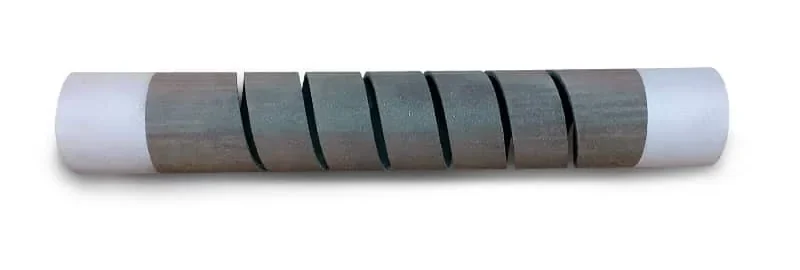
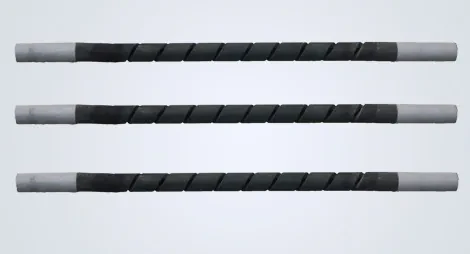
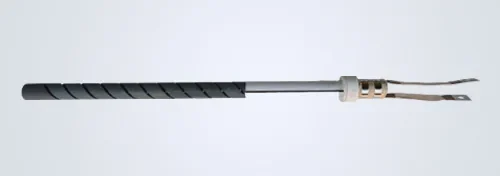
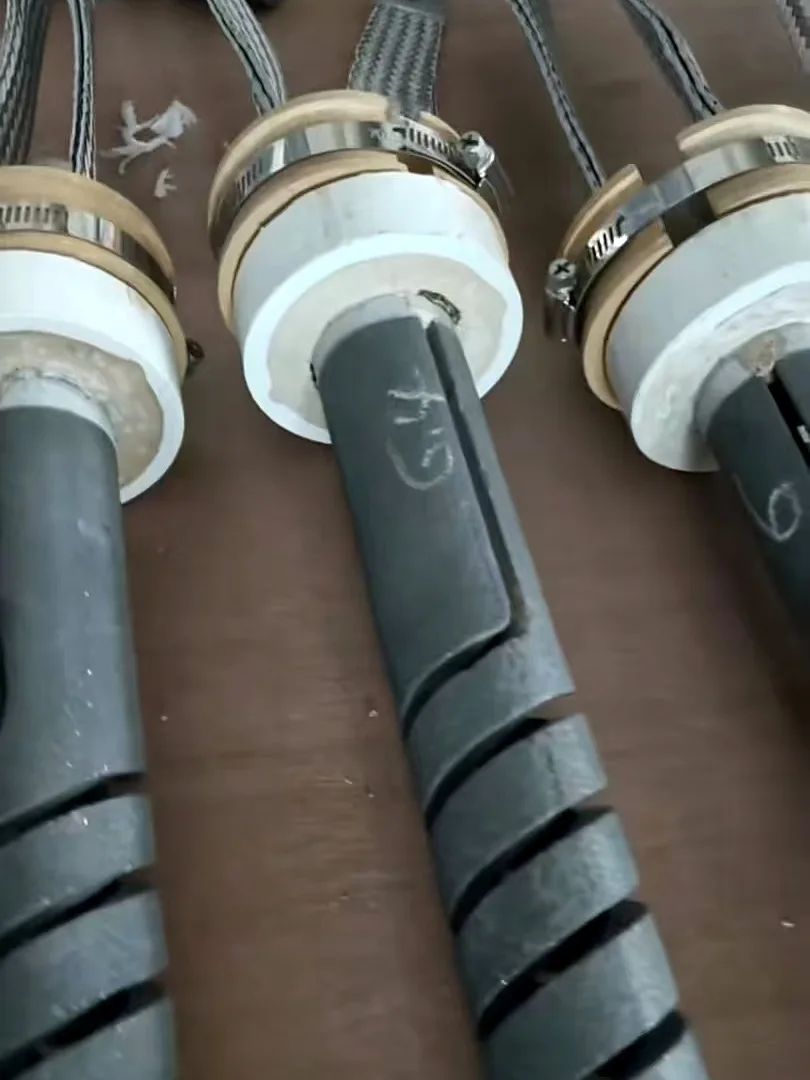
Photos: typical elements of this type, not a specific order.
| type | Thin straight rod, or spiral rod (single or double spiral) |
|---|---|
| OD | Outer diameter |
| HZ | Hot zone length (the spiral section on spiral rods) |
| OL | Overall length |
| R | Resistance or test value marked on the rod or box |
| set | Number of rods in the furnace |
What to send
- Furnace brand and model (type plate)
- Photo of the old rod next to a ruler, both ends visible
- OD, HZ and OL if you can measure
- Resistance or test value marked on the rod
- Single or double spiral, and where the terminals are
- How many rods the furnace holds
Furnace model first
We do not work from a list of furnace models. Send us your furnace model and old element to check: our reply states the size line and resistance marking we read, and anything still missing.
Background: SiC element resistance: ageing and matching. For six MoSi2 dental furnaces, what the furnace makers’ documents say is summarised on dental furnace models; the check still starts from your furnace and the old element.
3D view of the shape
See the element from every side: drag to rotate, switch Dimensions and Hot zone on or off. The 3D view loads only when you click.
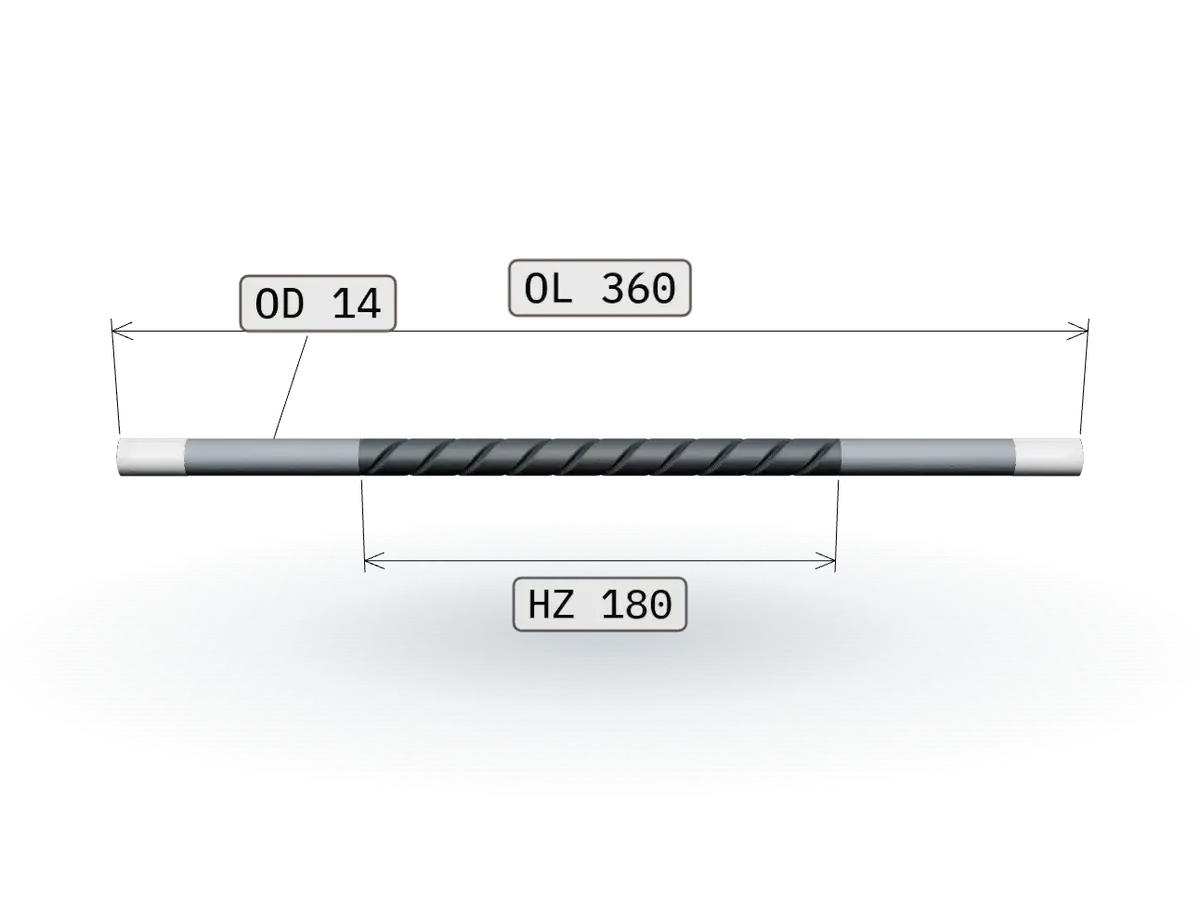 3D illustrationDrag to rotateSwipe sideways to rotate
Illustration only – not a drawing or a photo of a real part; dimensions vary by part number.
Where to measure
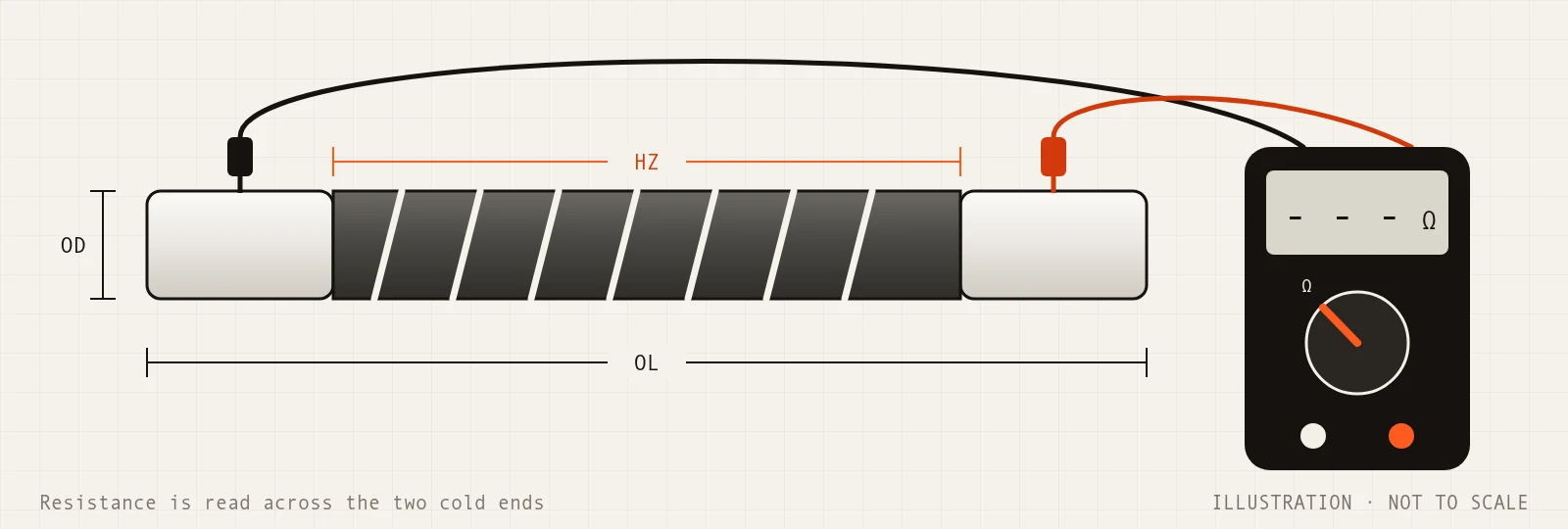
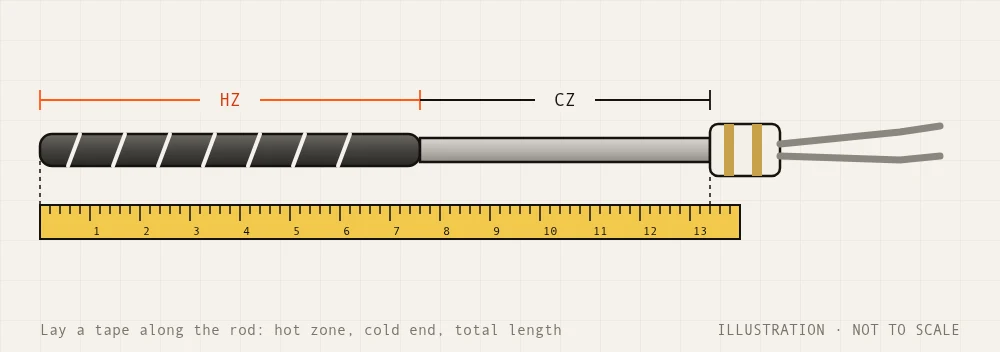
Drawn illustrations, not photos of a real part: they show where to measure the old rod and where its resistance is read. Sizes vary by furnace model.
Production & testing
Typical stages for elements of this type: raw material, firing and power tests, checking against the size line, and packing.
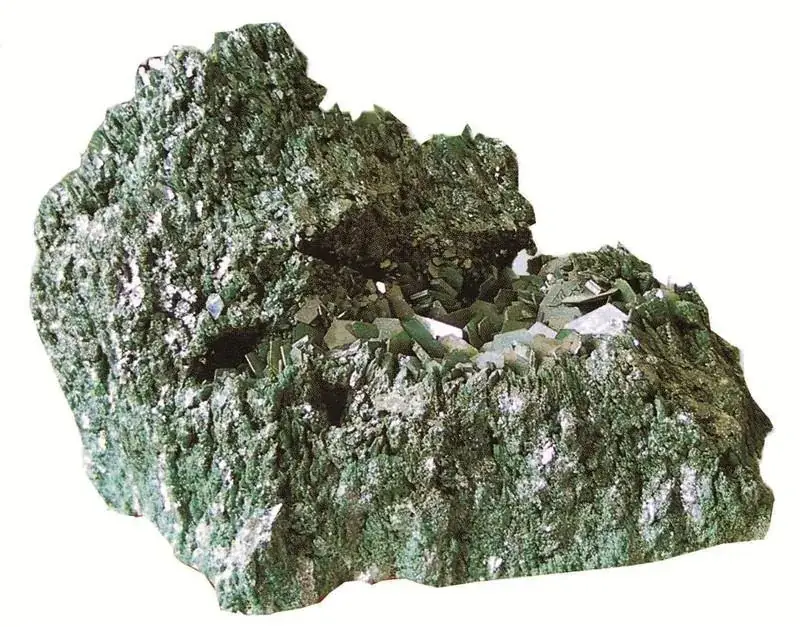
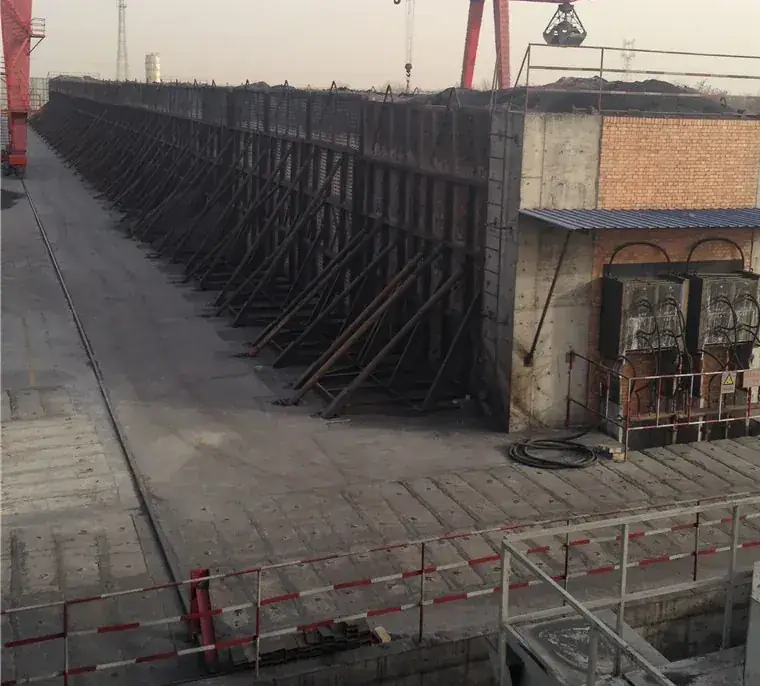
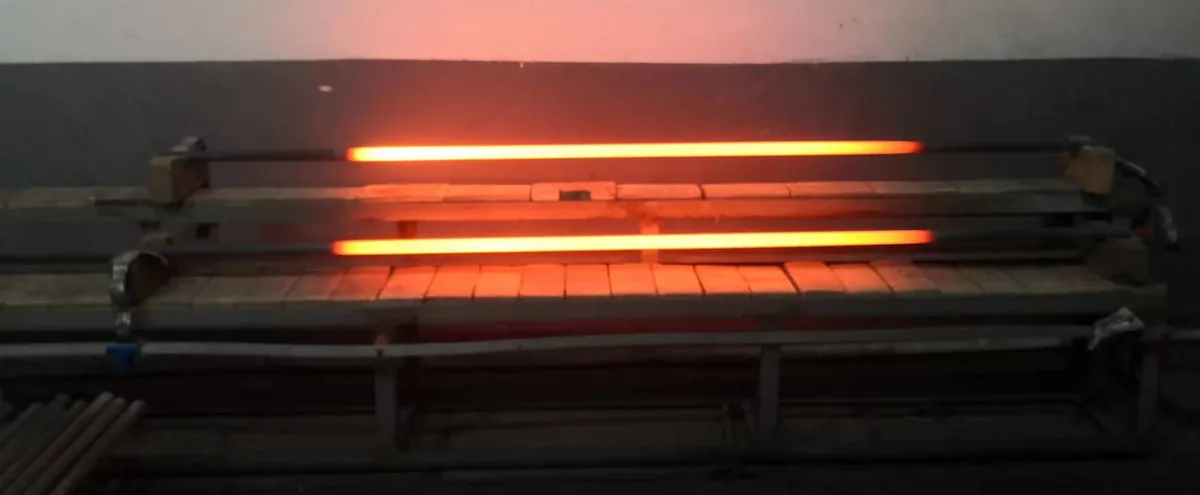
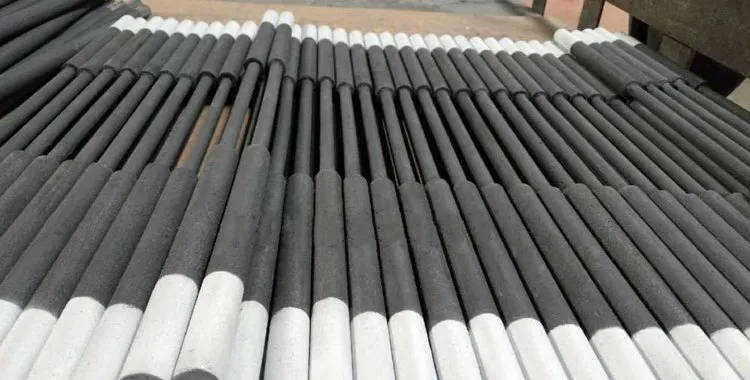
Photos show typical production, testing and packing of elements of this type – not a specific order.
How we check this element
Send
The furnace model and a photo of the old element, or its part number. Dimensions if you can measure.
We check and confirm the spec
We check the dimensions and reply in writing with the size line we read, any missing value, and whether we can supply it.
You confirm the configuration
Size, number of elements per set and, for SiC rods, how they are grouped by resistance.
Production and shipping
Production and shipping are arranged for the confirmed configuration; the quote covers that element and quantity.
Many dental furnaces use small MoSi2 elements instead: see MoSi2 4/9 and 3/6, or dental sintering furnaces for typical situations.
Questions buyers ask
Do you supply the SiC rods some dental furnaces use?
Yes: thin SiC rods and SGR spiral rods for dental furnaces that heat with silicon carbide instead of MoSi2. These elements are specific to the furnace, and spiral rods are also matched by resistance, so send us your furnace model and old element to check.
Which dental furnaces use SiC rods instead of MoSi2?
Only some models do, and the rod type differs between them. We do not publish a list of furnace models: send us your furnace model and old element to check.
Thin rod or spiral rod – how do I tell?
A spiral rod has a spiral cut along its hot zone; a thin rod is a plain straight rod. A photo of the old element next to a ruler shows which one you have, and whether the spiral is single or double.
Do SiC rods in a dental furnace have to be changed as a set?
SiC rods age in service, so rods that run together are matched by resistance, and element handbooks recommend replacing an aged group as a set. Tell us how many rods the furnace holds and what is marked on them.
Can you tell which element my furnace needs from its name?
Not from the furnace name or a part number alone. Our reply writes out the size line we read from your photos and dimensions, so you can compare it with the old element before you confirm anything.
Why don’t you just send a price?
Because a price for the wrong size helps nobody. Two elements that look the same can differ in diameter, centre distance or length. We first confirm the size line with you; the quote then covers that exact element and quantity.
Other sizes: send the part number. Request an element check →
Request a quote
Send the part number, or a photo of the old element with the dimensions. We reply by email with the size line we read and anything missing.