
03Kilns & heat treatment
SiC heating rods for kilns and heat-treatment furnaces
For ceramic and glass kilns, annealing and hardening furnaces that run on silicon carbide rods. With SiC, size is only half the answer – resistance and wiring matter too, so we check both before quoting.
Last updated 12 October 2026
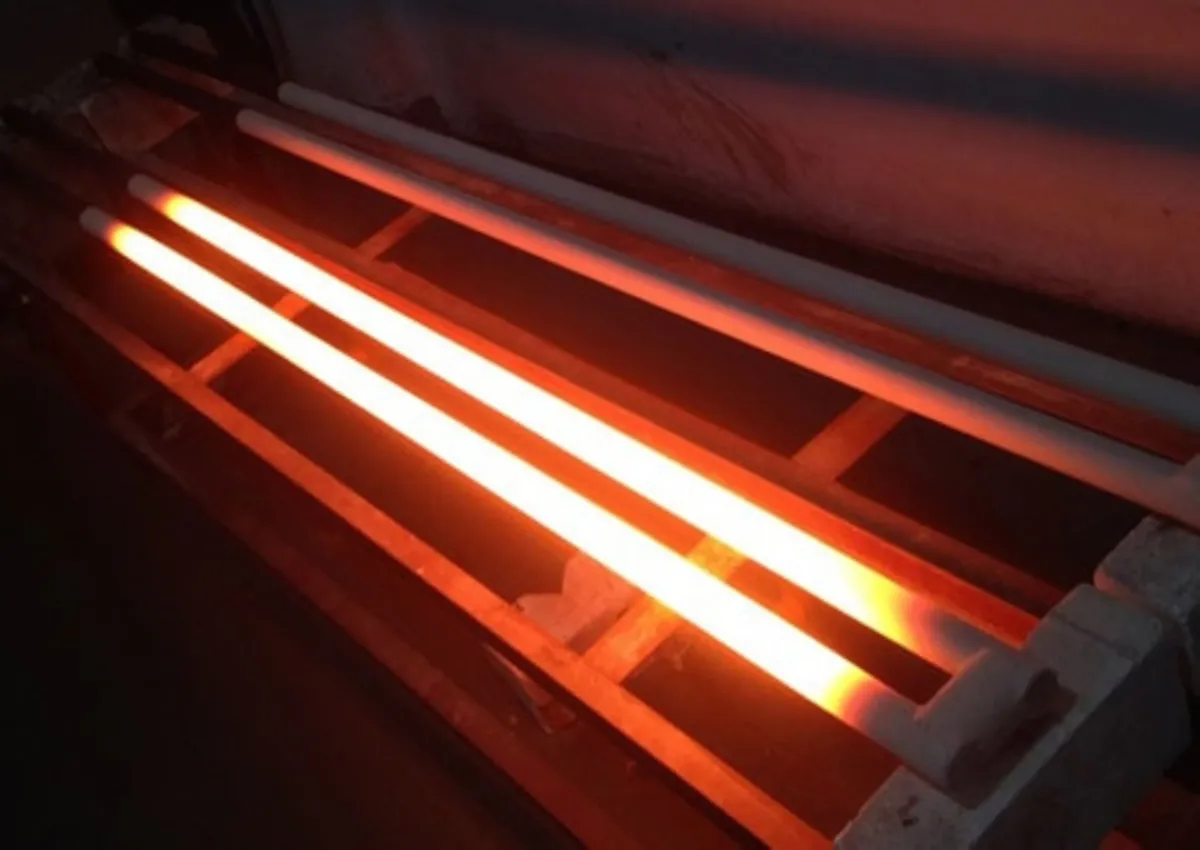
ATypical situations
Where it usually goes wrong
The furnace is down with broken rods
Production waits while someone searches for the right replacement.
What we do: Send a photo of a rod with its marking, the wiring and the number of rods; we tell you which values are still needed.
One new rod in an old set
SiC rods age in service; a single new rod in an aged series group takes the wrong share of the load. More: how SiC rods age and how new rods are matched.
What we do: We ask how the rods are connected and how old the set is, and discuss resistance grouping in our reply.
U rods that do not go through the roof
The legs did not match the holes.
What we do: We ask for the leg centre distance A, measured centre to centre, before anything else.
A relining is coming up
Element handbooks warn that moisture from a new brick or castable lining can damage SiC rods.
What we do: Tell us if the lining is new; it is part of the details we discuss for that set.
What this furnace type usually uses
| Uses | Straight SiC rods Ø25 and U-type SiC rods Ø25 |
|---|---|
| Check | OD, HZ, CZ, OL or centre distance A, resistance marking, series/parallel wiring, rods per group |
“Usually” is not a statement about your furnace: every request is checked against your own part number, photos and dimensions.
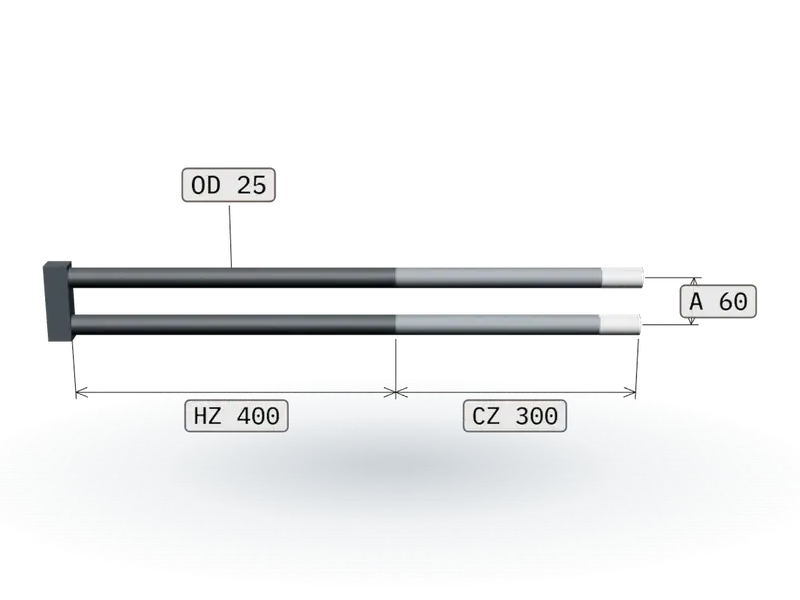
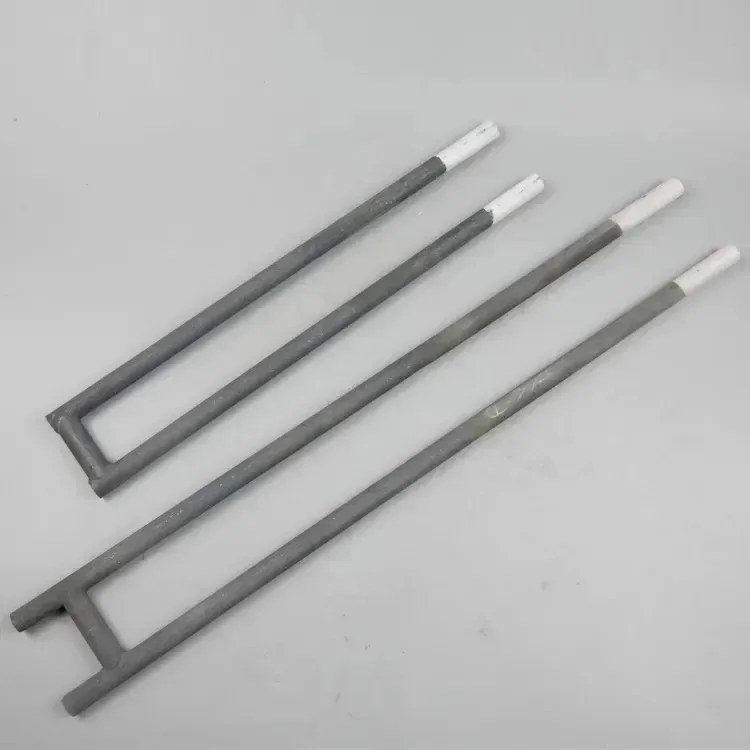 013D illustrationSiC heating element Ø25, U typeOD · HZ · CZ · centre distance ATwo legs joined by a bridge, both terminals on one side of the furnace.What to send
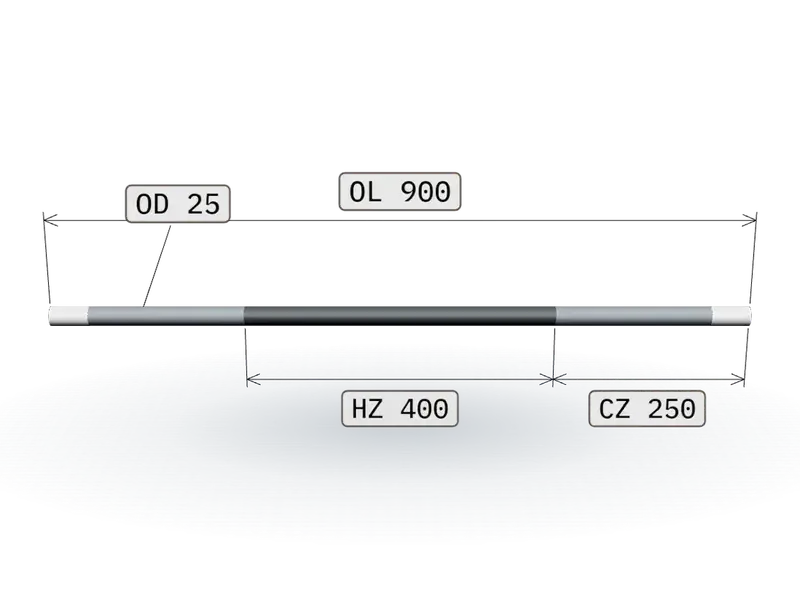
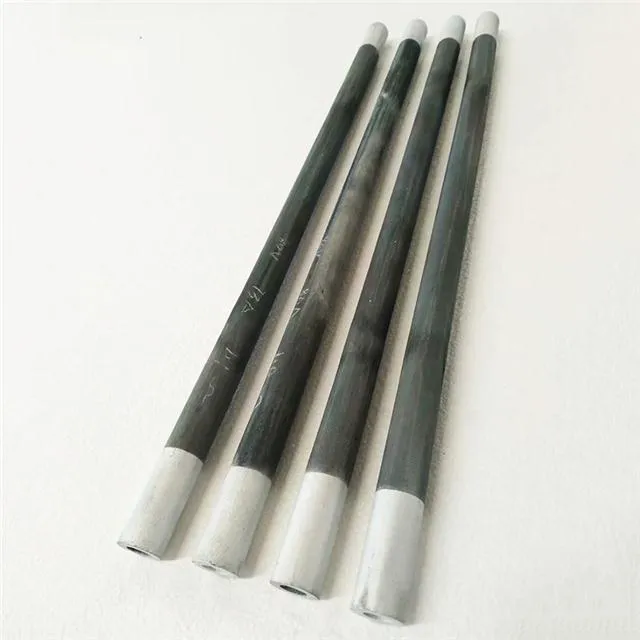 023D illustrationSiC heating rod Ø25, straightOD · HZ · CZ · OL · resistanceStraight silicon carbide rods: hot zone in the middle, cold ends at both sides.What to send
BHow we work
How we check your element
Send
The furnace model and a photo of the old element, or its part number. Dimensions if you can measure.
We check and confirm the spec
We check the dimensions and reply in writing with the size line we read, any missing value, and whether we can supply it.
You confirm the configuration
Size, number of elements per set and, for SiC rods, how they are grouped by resistance.
Production and shipping
Production and shipping are arranged for the confirmed configuration; the quote covers that element and quantity.
More on how we work.
Testing, checking and packing
Typical steps for elements of these types: power tests on a rack, checks against the size line, and packing in foam and crates. Elements are brittle at room temperature, so handbooks advise unpacking on a flat surface and checking each element for cracks before it goes into the furnace.
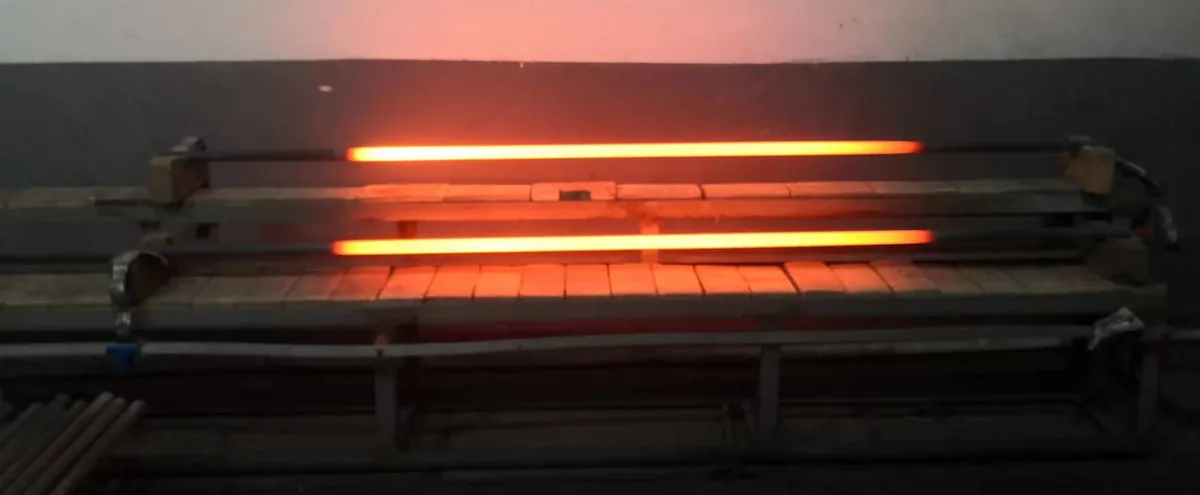
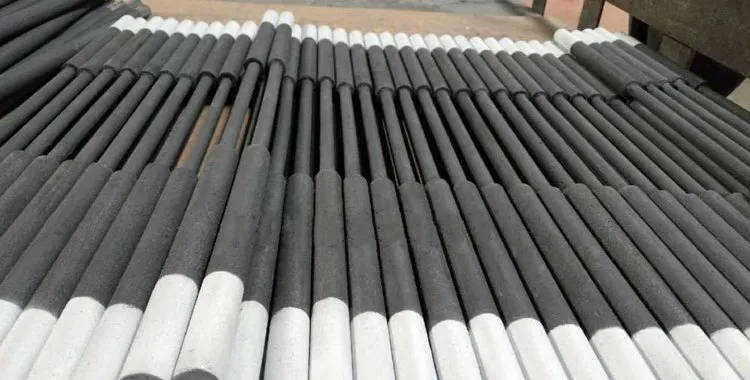
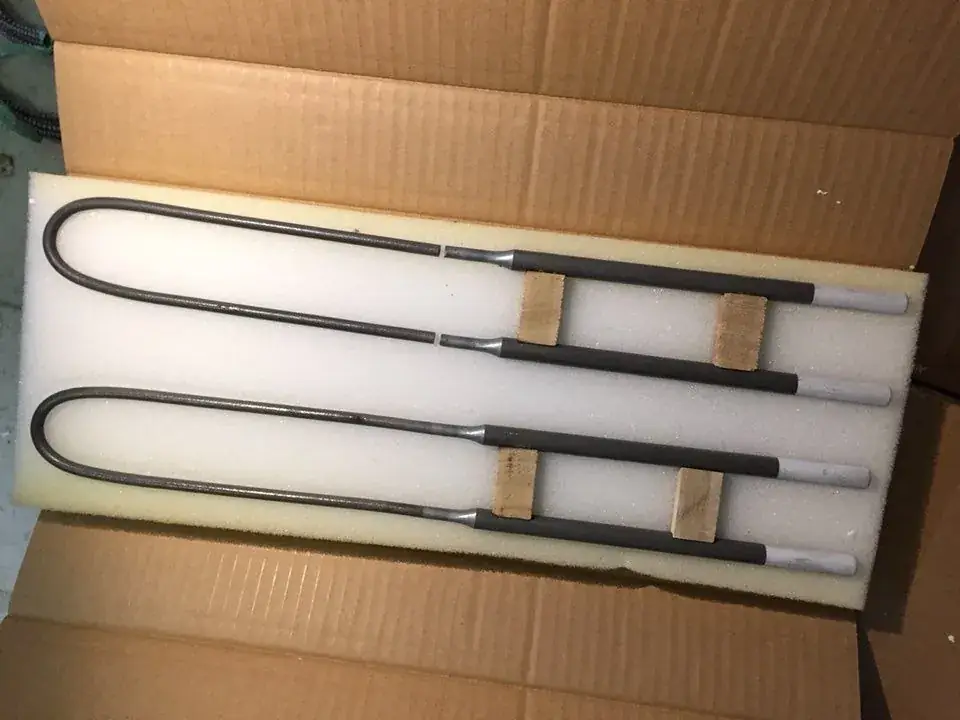
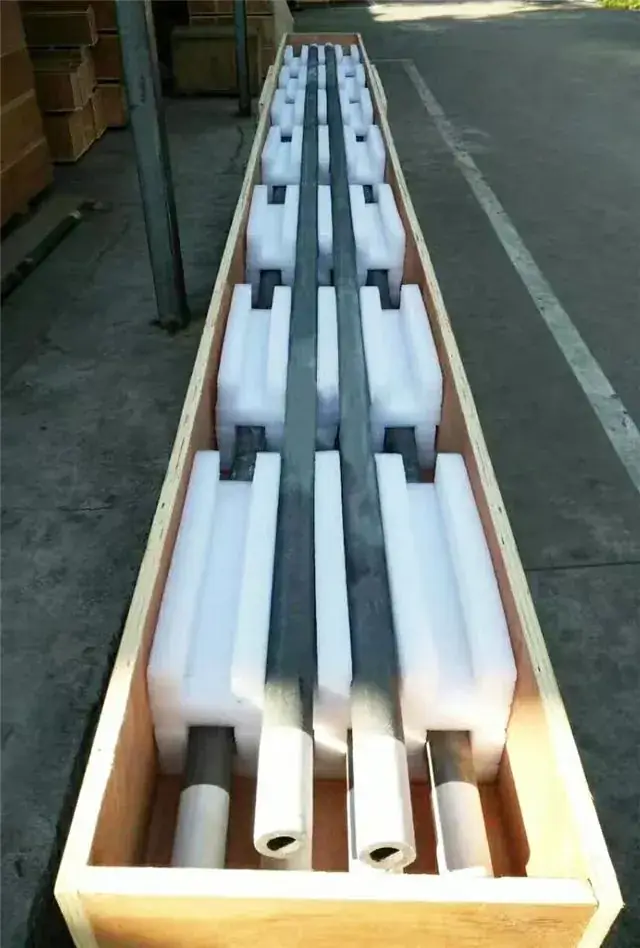
Photos show typical elements, testing and packing of each type – not a specific order, and not a promise of how an order is packed. Packing details are confirmed with the quote.
Questions buyers ask
Do SiC rods need to be matched by resistance?
Yes, for rods that run together. SiC resistance is specified hot (around 1000 °C), so a room-temperature multimeter reading says little; the value or test current marked on the old rod is the reference. Element handbooks commonly give ±5 % between rods in series and ±10 % in parallel, and recommend changing an aged group as a set. Tell us how your rods are connected; resistance grouping can be discussed in our reply.
Why does the centre distance matter so much?
The legs of a U element pass through holes or slots in the furnace roof or wall. Leg centre distance is measured centre to centre (a for MoSi2, A for SiC U rods), and it differs between furnaces even when the diameters are the same: a 6/12 element, for example, comes with different centre distances. A few millimetres decide whether the element goes in, so we always ask for it if it is missing.
There is no readable part number. What now?
Send the furnace brand and model from the type plate and a photo of the old element next to a ruler, with the dimensions you can measure. Tick “I don’t know the dimensions” in the form if you cannot measure – the photos are enough to start.
Can you tell which element my furnace needs from its name?
Not from the furnace name or a part number alone. Our reply writes out the size line we read from your photos and dimensions, so you can compare it with the old element before you confirm anything.
Does sending a request commit me to anything?
No. A request is a question about one element or one list; you decide after our reply.
Request a quote
Send the part number, or a photo of the old element with the dimensions. We reply by email with the size line we read and anything missing.