
05SiC rod Ø25 · straight
SiC heating element 25 mm: straight silicon carbide rods
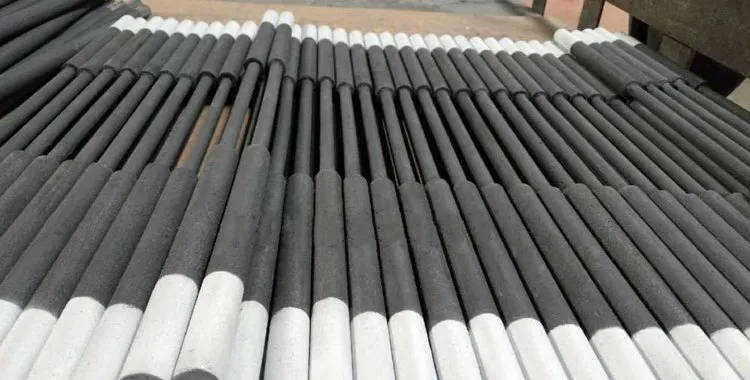
Straight SiC rods with a 25 mm diameter, described by hot zone, cold ends, overall length and resistance. We check the size and resistance of your old rod before anything is quoted.
Written asOD25 × HZ × CZ × OL
Last updated 12 October 2026
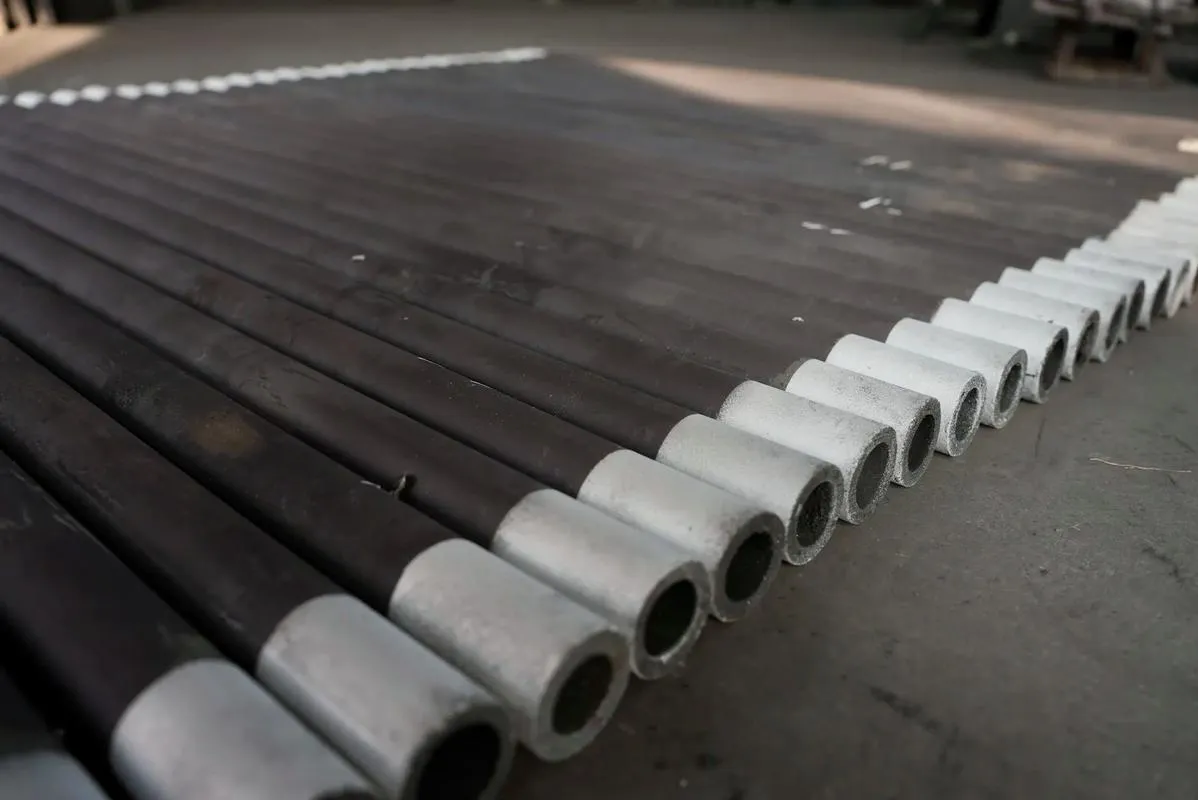
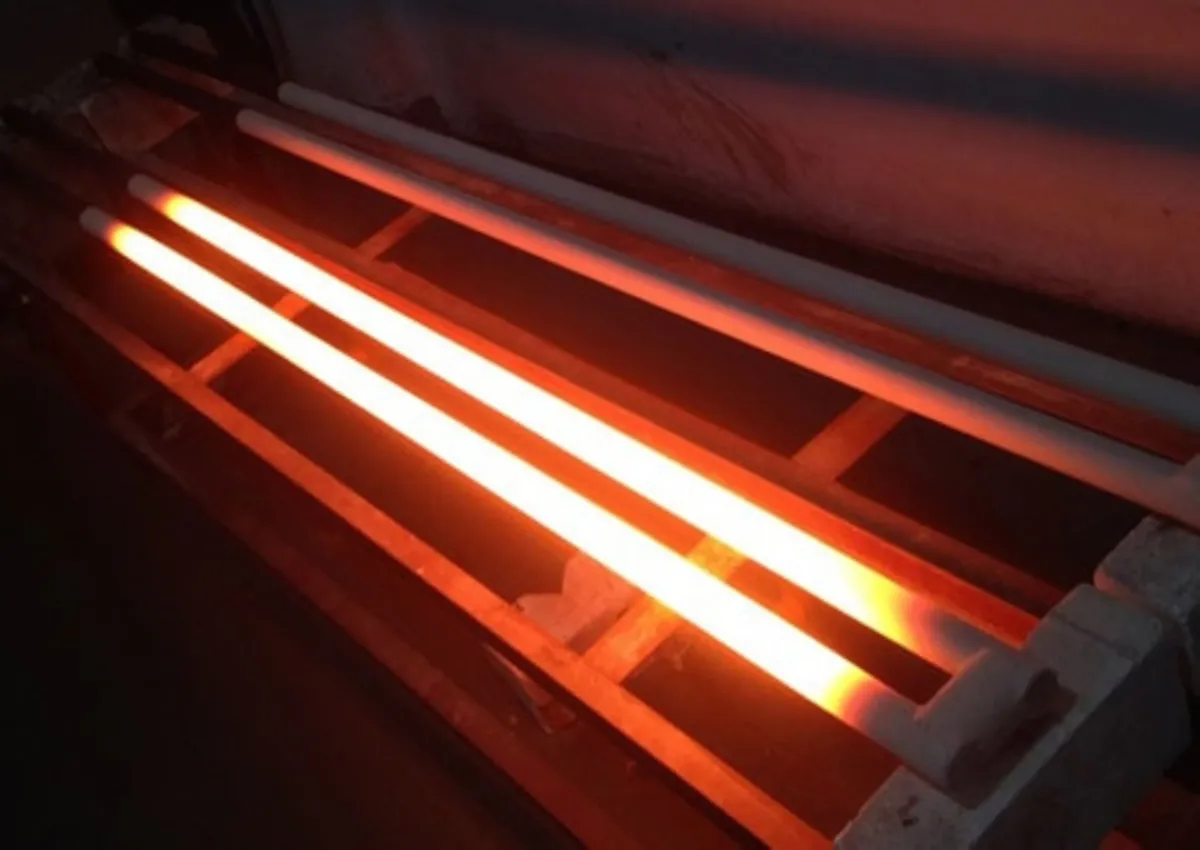
Photos: typical elements of this type, not a specific order.
| OD | Outer diameter (25 mm on this page) |
|---|---|
| HZ | Hot zone length, the glowing middle section |
| CZ | Cold end length at each side |
| OL | Overall length |
| R | Resistance or test value marked on the rod or box |
What to send
- Part number on the rod, label or box, if readable
- OD, HZ, CZ and OL (written e.g.
OD25 × HZ400 × CZ250 × OL900– notation example only) - Resistance or test value marked on the cold end
- Wiring: series / parallel, and rods per group
- Furnace brand and model
- Photo of the old rod next to a tape, both ends visible
Size and resistance
Two rods of the same size can have different resistance. For rods that run together, the marking on the old rod is the reference.
Why resistance rises in service and how new rods are matched to an aged set: SiC element resistance: ageing and matching.
Photos
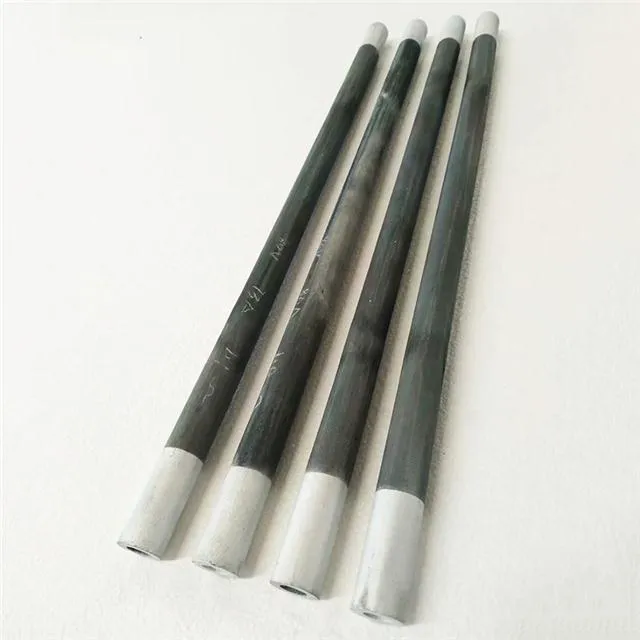
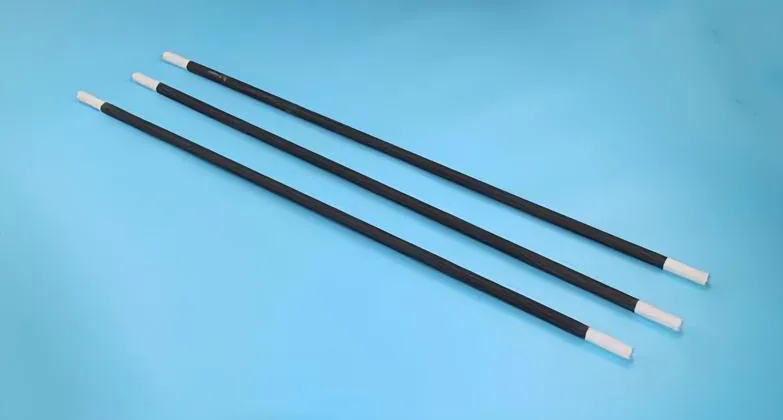
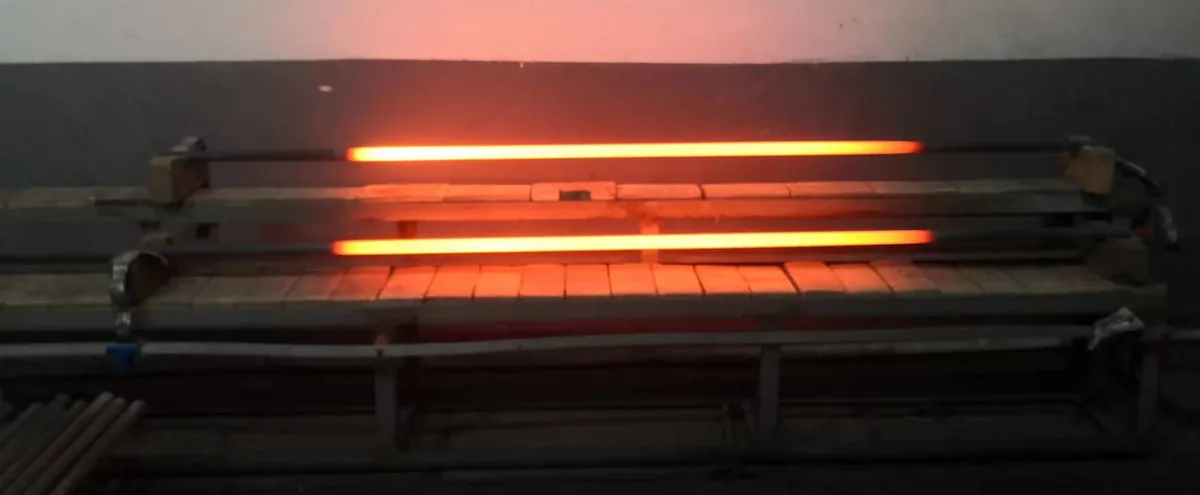
Photos show typical elements of this type, not a specific order or furnace.
Production & testing
Typical stages for elements of this type: raw material, firing and power tests, checking against the size line, and packing.
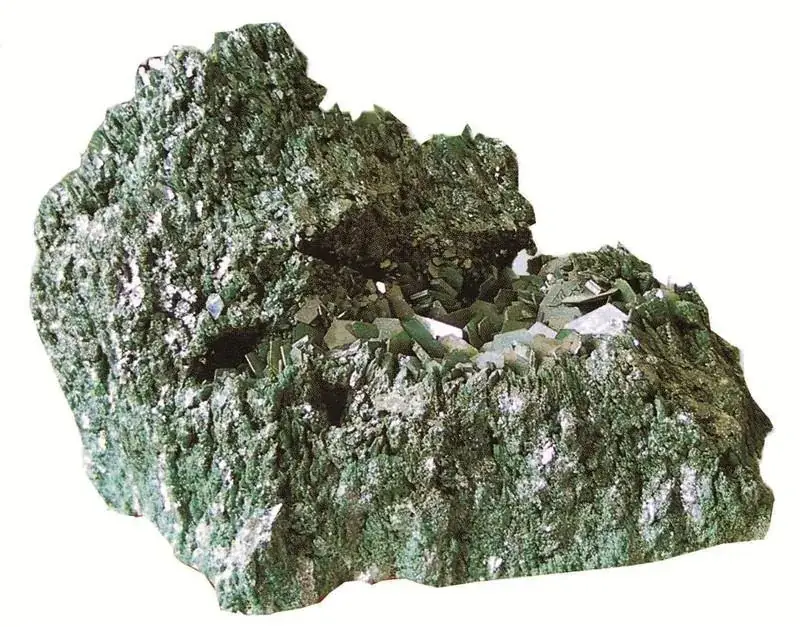
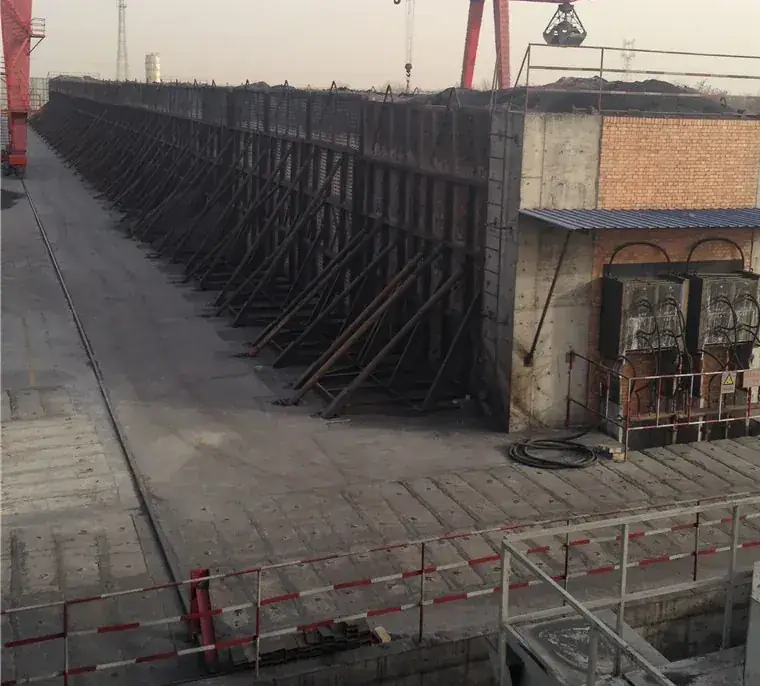
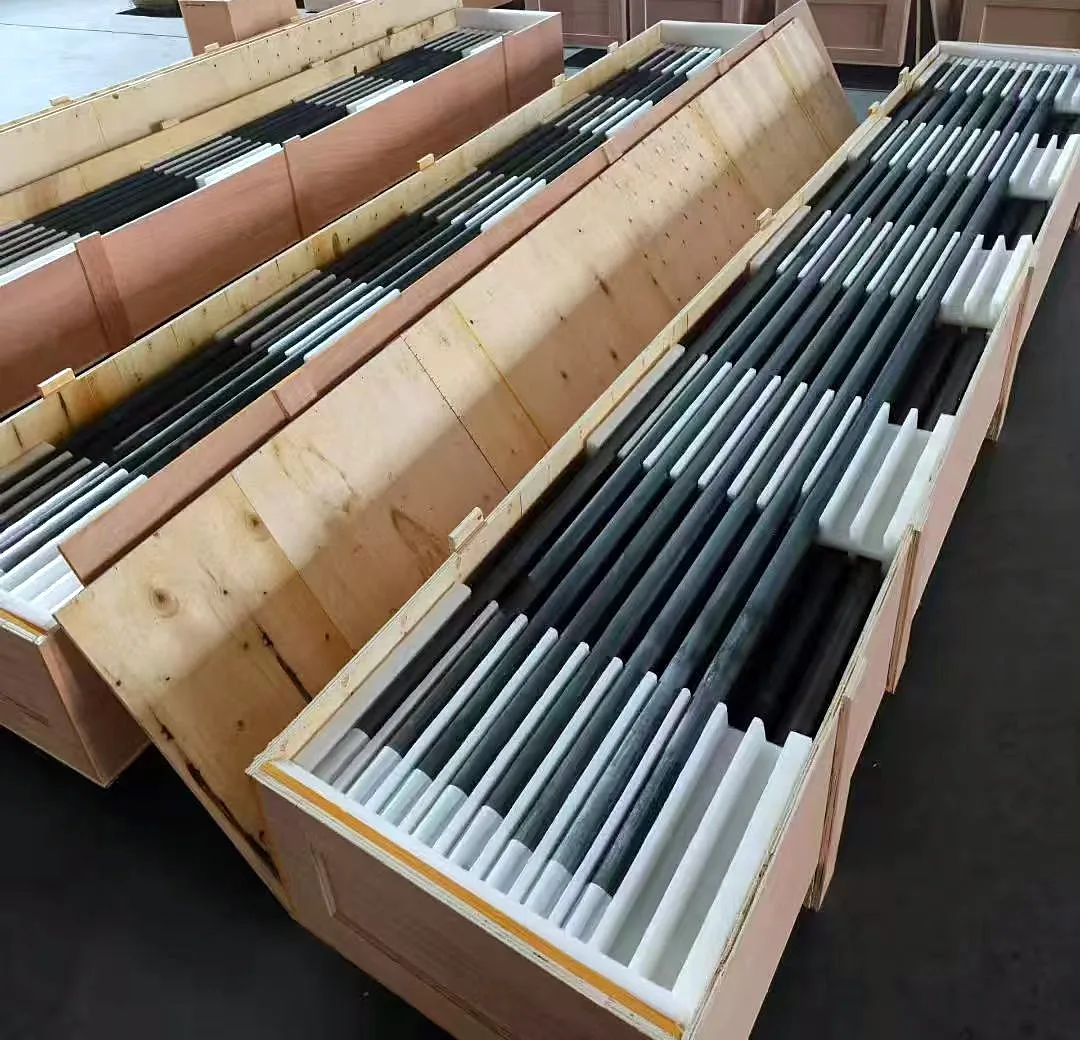
Photos show typical production, testing and packing of elements of this type – not a specific order.
How we check this element
Send
The furnace model and a photo of the old element, or its part number. Dimensions if you can measure.
We check and confirm the spec
We check the dimensions and reply in writing with the size line we read, any missing value, and whether we can supply it.
You confirm the configuration
Size, number of elements per set and, for SiC rods, how they are grouped by resistance.
Production and shipping
Production and shipping are arranged for the confirmed configuration; the quote covers that element and quantity.
Questions buyers ask
Do SiC rods need to be matched by resistance?
Yes, for rods that run together. SiC resistance is specified hot (around 1000 °C), so a room-temperature multimeter reading says little; the value or test current marked on the old rod is the reference. Element handbooks commonly give ±5 % between rods in series and ±10 % in parallel, and recommend changing an aged group as a set. Tell us how your rods are connected; resistance grouping can be discussed in our reply.
Can one SiC rod be replaced, or the whole set?
If the other rods are still fairly new, one rod can often be added; if the group has run for a long time, element handbooks recommend replacing the group as a set. Tell us the age of the set and how it is wired.
There is no readable part number. What now?
Send the furnace brand and model from the type plate and a photo of the old element next to a ruler, with the dimensions you can measure. Tick “I don’t know the dimensions” in the form if you cannot measure – the photos are enough to start.
Why don’t you just send a price?
Because a price for the wrong size helps nobody. Two elements that look the same can differ in diameter, centre distance or length. We first confirm the size line with you; the quote then covers that exact element and quantity.
Other sizes: send the part number. Request an element check →
Request a quote
Send the part number, or a photo of the old element with the dimensions. We reply by email with the size line we read and anything missing.